August 2026 21

Comparison of crypto coins and stock market charts.

Crypto vs Stocks 2026: Volatility, Hours, Regulation, Returns

Quick Answer: Crypto and stocks differ in four big ways: volatility (crypto swings far more), trading hours (crypto is 24/7, stocks are exchange-hours), regulation (stocks are heavily regulated, crypto partially), and returns (crypto has had higher upside and deeper drawdowns historically). Neither is “better” — they serve different roles. Many investors hold both: stocks for stability and crypto as a small, higher-risk allocation. Crypto and stock markets are fundamentally different animals. Understanding those differences helps you decide how (and whether) to allocate. This is a comparison guide, not financial advice. ...

August 5, 2026 · 8 min · Jarrod Gravison
Colorful meme coin tokens with a warning sign on a trading screen.

Meme Coins Guide 2026: DOGE, PEPE, WIF, BONK

Quick Answer: Meme coins like DOGE, PEPE, WIF, and BONK are highly speculative tokens driven by hype and community sentiment rather than fundamentals. They can surge massively — and crash just as fast. If you trade them, use only a small amount you can afford to lose entirely, buy on reputable exchanges, and have an exit plan. Never invest real savings in meme coins, and treat any anonymous project promising guaranteed returns as a likely scam. ...

August 5, 2026 · 11 min · Jarrod Gravison
Leveraged futures trading terminal with risk warnings.

Crypto Futures Trading 2026: Perpetuals, Funding, Leverage

Quick Answer: Crypto futures — especially perpetual swaps on exchanges like Bybit, Binance, and OKX — let you trade with leverage and bet on price going up OR down. Key concepts: perpetual swaps (no expiry), funding rates (periodic payments between longs/shorts), leverage/margin (borrowed position size), and liquidation (position force-closed when losses exceed margin). Most retail futures traders lose money — trade only small, well-risked amounts, or avoid leverage entirely. Futures trading is the riskiest corner of crypto. It’s where beginners get destroyed by liquidation. This guide breaks down exactly how it works so you understand the machinery before you consider risking a dollar. This is informational, not financial advice. ...

August 5, 2026 · 10 min · Jarrod Gravison
Staking yield growth charts with crypto coins.

Best Crypto Staking Platforms 2026: APY Comparison

Quick Answer: The best crypto staking platforms of 2026 are Lido (best liquid staking for ETH with the widely-used stETH token), Rocket Pool (best decentralized/trust-minimized ETH staking with rETH), and exchange staking on Coinbase, Kraken, or Binance (easiest for beginners). Expected ETH staking yields are roughly 3–5% APY in 2026, though this varies. The right choice balances yield, liquidity, and trust. Staking lets you earn rewards by locking up proof-of-stake coins to help secure a network. There are three main routes: exchange staking (easiest but custodial), liquid staking (Lido/Rocket Pool, flexible and DeFi-friendly), and solo staking (max control but needs 32 ETH + technical setup). ...

August 5, 2026 · 13 min · Jarrod Gravison
Canadian tax filing documents with crypto coins and maple leaf.

Crypto Taxes in Canada 2026: Complete CRA Guide

Quick Answer: In Canada, the CRA treats crypto as a commodity and taxes it. Selling or trading crypto generally triggers a capital gain (50% taxable in 2026) or a business income gain (100% taxable) depending on your activity. You must track your Adjusted Cost Base (ACB) — and margin positions complicate this — then report on your T1 return. Koinly and CoinTracker are the top tools for Canadians, with Koinly offering strong ACB support. ...

August 5, 2026 · 16 min · Jarrod Gravison
Tax documents and cryptocurrency coins with a calculator.

Crypto Taxes in the USA 2026: Complete IRS Guide

Quick Answer: In the US, the IRS treats crypto as property, not currency. You owe capital gains tax whenever you sell, spend, or trade crypto for another asset (including crypto-to-crypto). Report on Form 8949/Schedule D. Use specific identification (spec-ID) or FIFO cost-basis to calculate gains, and tax software like CoinTracker or Koinly to automate it. Short-term (<1 year) gains are taxed at ordinary rates; long-term (≥1 year) at lower capital gains rates. ...

August 5, 2026 · 14 min · Jarrod Gravison
Hardware wallet device with seed phrase card and crypto coins.

Best Crypto Wallets 2026: Hardware vs Software

Quick Answer: The best crypto wallets in 2026 are Ledger and Trezor for hardware (cold storage of long-term holdings) and MetaMask (Ethereum/EVMs), Phantom (Solana), and Trust Wallet (multi-chain mobile) for software. Best practice: use a hardware wallet for savings and a software wallet for active trading — never keep large amounts on an exchange or hot wallet. Your crypto wallet doesn’t “hold” coins — it holds your private keys (which prove ownership). Whoever controls the keys controls the crypto. “Not your keys, not your coins” is the core principle of self-custody. This guide explains the two wallet types, compares the best options, and walks through secure setup, backups, and a security checklist. ...

August 5, 2026 · 10 min · Jarrod Gravison
Multiple trading strategy charts and indicators on a screen.

Crypto Trading Strategies 2026: DCA, Swing, Grid, and Arbitrage

Quick Answer: The four most practical crypto strategies in 2026 are dollar-cost averaging (DCA) (best for long-term accumulation with low effort), swing trading (best for capturing multi-day-to-week trends), grid trading (best for bots in ranging markets), and arbitrage (best for advanced users exploiting price gaps across exchanges). DCA suits most people; the others demand more time, skill, and risk tolerance. There’s no single “best” crypto strategy — it depends on your time, skill, risk tolerance, and goals. This guide lays out four proven approaches, how each works, who it’s for, and the real risks. None of this is financial advice. ...

August 5, 2026 · 13 min · Jarrod Gravison
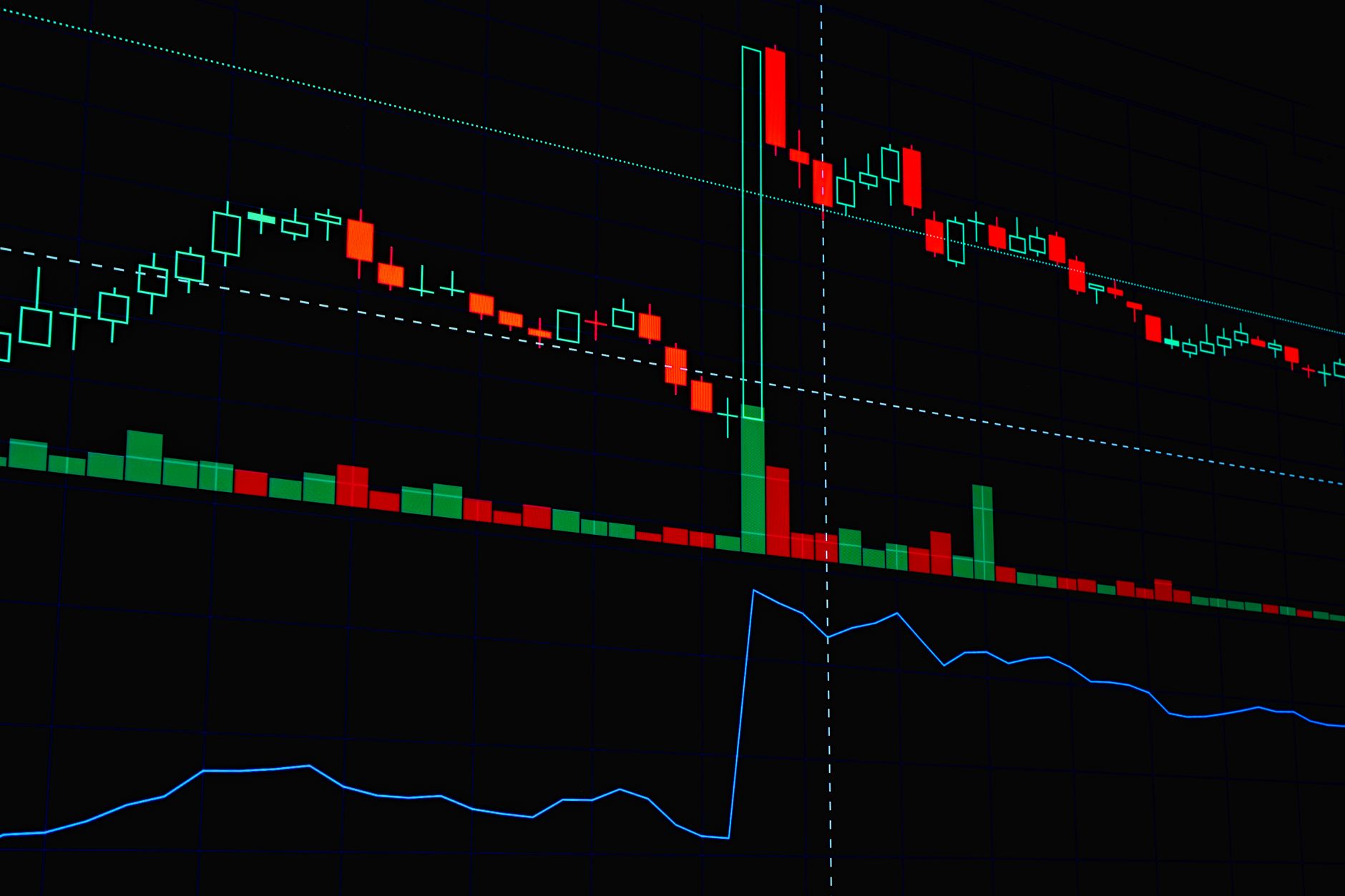
Candlestick chart on a trading terminal screen.

How to Trade Crypto for Beginners: 2026 Step-by-Step

Quick Answer: Beginner crypto trading in 2026 starts with spot trading (buying and selling actual coins — not leverage). Master three things first: (1) the difference between market and limit orders; (2) a few basic chart patterns and indicators; and (3) strict risk management (never risk more than 1–2% per trade, use stop-losses, don’t over-leverage). Skip futures and leverage until you’re consistently profitable on spot. This is not financial advice. Trading crypto is high risk — most day traders lose money, especially with leverage. If you’re new, treat this as “how the tools work,” not “how to get rich.” Read it, paper-trade, and start small. ...

August 5, 2026 · 14 min · Jarrod Gravison
Solana ecosystem visualization with fast network speed concept.

How to Buy Solana in 2026: Complete Guide

Quick Answer: To buy Solana (SOL) in 2026: (1) use a regulated exchange that lists SOL (Coinbase/Kraken for the US, Newton/NDAX for Canada, Binance/Bybit globally); (2) fund with a bank transfer; (3) buy SOL; (4) set up the Phantom wallet to store and interact with Solana’s DeFi ecosystem; and (5) optionally stake SOL for yield. Solana is a high-speed, low-fee blockchain — one of the cheapest networks to transact on. Solana (ticker SOL) is one of the fastest major blockchains, capable of thousands of transactions per second at minimal cost. Its low fees and speed have made it a hub for DeFi, NFTs, and meme coins. Buying SOL is easy — it’s listed on virtually every major exchange — and so is using it, thanks to the excellent Phantom wallet. ...

August 5, 2026 · 12 min · Jarrod Gravison
Ethereum themed crypto coins and code on a dark background.

How to Buy Ethereum in 2026: Complete Guide

Quick Answer: To buy Ethereum (ETH) in 2026: (1) open an account on a regulated exchange for your country (Coinbase/Kraken for the US, Wealthsimple/Newton for Canada); (2) pass KYC and fund with a bank transfer; (3) buy ETH as a market or limit order; (4) consider staking to earn yield on your ETH; and (5) move long-term holdings to a self-custody wallet. Ethereum is the second-largest cryptocurrency and the foundation of DeFi and most stablecoins. ...

August 5, 2026 · 11 min · Jarrod Gravison
Bitcoin coin next to a hardware wallet on a dark surface.

How to Buy Bitcoin in 2026: Complete Beginner Guide

Quick Answer: Buying Bitcoin in 2026 takes five steps: (1) pick a reputable, jurisdiction-appropriate exchange (e.g. Coinbase/Kraken for the US, Wealthsimple/Newton for Canada); (2) create an account and complete KYC identity verification; (3) fund it with a bank transfer or card; (4) place a buy order for BTC; and (5) move significant holdings to a self-custody wallet. Bitcoin is volatile, so only invest money you can afford to lose. Buying your first Bitcoin is easier than most people expect, but doing it safely requires understanding a few fundamentals: which exchange to use, how KYC works, and — most importantly — how to keep your coins truly yours. This guide walks through the whole process end to end. ...

August 5, 2026 · 10 min · Jarrod Gravison
Bitcoin ETF fund management concept with gold coins and charts.

Best Bitcoin ETFs 2026: IBIT, FBTC, ARKB, GBTC Compared

Quick Answer: The best spot Bitcoin ETFs in 2026 are BlackRock’s iShares Bitcoin Trust (IBIT) (largest AUM, lowest risk of issuer distress), Fidelity Wise Origin Bitcoin Fund (FBTC) (strong brand + low fees), and ARK 21Shares Bitcoin ETF (ARKB) (competitive fees). Grayscale GBTC is now a low-fee spot ETF but has higher expense drag than peers following its conversion. All are SEC-approved, trade on US stock exchanges, and offer a simple, regulated way to gain Bitcoin exposure inside a brokerage account. ...

August 5, 2026 · 13 min · Jarrod Gravison
Decentralized finance network visualization with interconnected nodes.

Best Decentralized Exchanges 2026: Uniswap, dYdX, PancakeSwap, Jupiter

Quick Answer: The best decentralized exchanges (DEXs) in 2026 are Uniswap (best overall for Ethereum and its L2s), dYdX (best for decentralized perpetuals and leverage), PancakeSwap (best low-cost option on BNB Chain), and Jupiter (best aggregator/routing on Solana). A DEX lets you trade directly from your wallet — no account, no KYC, and you keep custody of your assets — but you pay for it with gas fees and assume smart-contract risk. ...

August 5, 2026 · 8 min · Jarrod Gravison
Canadian crypto trading platform on mobile with maple leaf theme.

Best Crypto Exchanges in Canada for 2026

Quick Answer: The best Canadian crypto exchanges in 2026 are Wealthsimple (best all-in-one app for beginners), Newton (best low fees and wide selection), Bitbuy (best for security-conscious Canadians), NDAX (best for active traders), and Shakepay (best for simple Bitcoin/Ethereum buying with free bitcoin perks). All five support CAD funding via Interac e-Transfer, which is a key advantage over US-focused platforms. Canada has strict — but clear — crypto regulations under the Canadian Securities Administrators (CSA), and the exchanges that serve Canadians well are registered and compliant. Bitcoin and Ethereum are the most reliable buys in Canada; other coins have spottier availability depending on the platform. ...

August 5, 2026 · 12 min · Jarrod Gravison

Best Crypto Exchanges in the USA (2026): Fully Regulated Options

Best Crypto Exchanges in the USA: Regulated Choices for 2026 Trading crypto in the United States comes with a serious constraint: most of the world’s biggest exchanges — Binance, Bybit, OKX, KuCoin — are not available to US residents. That leaves a handful of fully regulated platforms that obey US federal and state rules. TL;DR: Coinbase is the best beginner-friendly, highly regulated option for most US investors; Kraken is the best choice for active traders who want low fees and strong security; Gemini is ideal for those prioritizing transparency and regulated custody; and Crypto.com is a solid all-rounder with a strong rewards ecosystem. All four are US-compliant money transmitters, but their fee structures and features differ meaningfully. ...

August 5, 2026 · 12 min · Jarrod Gravison

Best Crypto Exchanges of 2026 Compared: Fees, Security, and Coins

Best Crypto Exchanges of 2026: Full Comparison Choosing the right crypto exchange is the single most important decision a trader makes. The platform you pick determines your fees, your available coins, your security exposure, and ultimately how much of your profit you keep. TL;DR: Binance offers the lowest fees and largest coin selection for global users, Coinbase is the safest and most beginner-friendly option for US investors, Kraken is the best all-rounder for serious traders who value security, Bybit and OKX dominate in derivatives and perps, and KuCoin remains a solid fallback for altcoins. If you trade regularly, fee differences of 0.1% or more per trade can easily add up to hundreds or thousands of dollars a year. ...

August 5, 2026 · 12 min · Jarrod Gravison

Bitcoin ETF Flows: AUM Leaders and Net Inflows (2026)

TL;DR: Since US spot Bitcoin ETFs launched in January 2024, they’ve become the dominant channel for institutional Bitcoin exposure. BlackRock’s IBIT leads with roughly ~$35B in assets under management, followed by Fidelity FBTC (~$18B), Grayscale GBTC (~$20B), and ARK 21Shares (ARKB, ~$5B). Cumulative net flows across all US spot ETFs now total tens of billions of dollars and have been a primary driver of Bitcoin’s recovery from the 2022 lows. ...

August 5, 2026 · 5 min · Jarrod Gravison

Crypto Market Cap History: Total Market Size Over Time

TL;DR: The total crypto market cap has followed a violent boom-bust cycle: roughly $0.2 trillion in 2020, soaring to a ~$3 trillion peak in late 2021, crashing to a ~$0.8 trillion bottom in late 2022 after the FTX collapse, then recovering steadily through 2023–2026 to sit around ~$3.5 trillion today. Bitcoin has consistently held a large share of the market, though its dominance has swung as altcoins (led by Ethereum) take turns in the spotlight. ...

August 5, 2026 · 4 min · Jarrod Gravison

Crypto Security Guide: Protect Your Assets in 2026

TL;DR: In 2026, keeping your crypto safe comes down to a handful of non-negotiable habits: store meaningful amounts in a hardware (cold) wallet rather than on an exchange or hot wallet; use app-based 2FA or a hardware security key (never SMS-only) on every exchange; keep your seed phrase offline on paper or metal and never typed into any device or website; lock down exchange accounts with withdrawal whitelists and anti-phishing codes; and treat any message promising free tokens or “guaranteed returns” as a scam. Add SIM-swap protection (carrier PIN, port-freeze) and consider multisig for large amounts. The rule of thumb: if someone asks for your seed phrase, it’s a scam. ...

August 5, 2026 · 9 min · Jarrod Gravison

Top Crypto Exchanges by 24-Hour Trading Volume (2026)

TL;DR: Binance remains the world’s largest exchange by 24-hour volume (~$65B combined spot + derivatives), followed by Bybit (~$15B), OKX (~$12B), and Coinbase (~$8B). Derivatives (futures/perpetuals) consistently account for roughly two-thirds of all crypto volume — far more than spot trading. US-regulated volume is led by Coinbase and Kraken, since offshore giants like Binance, Bybit, OKX, and KuCoin don’t serve US residents. Trading volume — the value that changes hands in 24 hours — is the best single indicator of an exchange’s liquidity, which directly affects your ability to enter and exit positions without moving the price against you. Higher volume means tighter spreads and deeper order books. ...

August 5, 2026 · 4 min · Jarrod Gravison