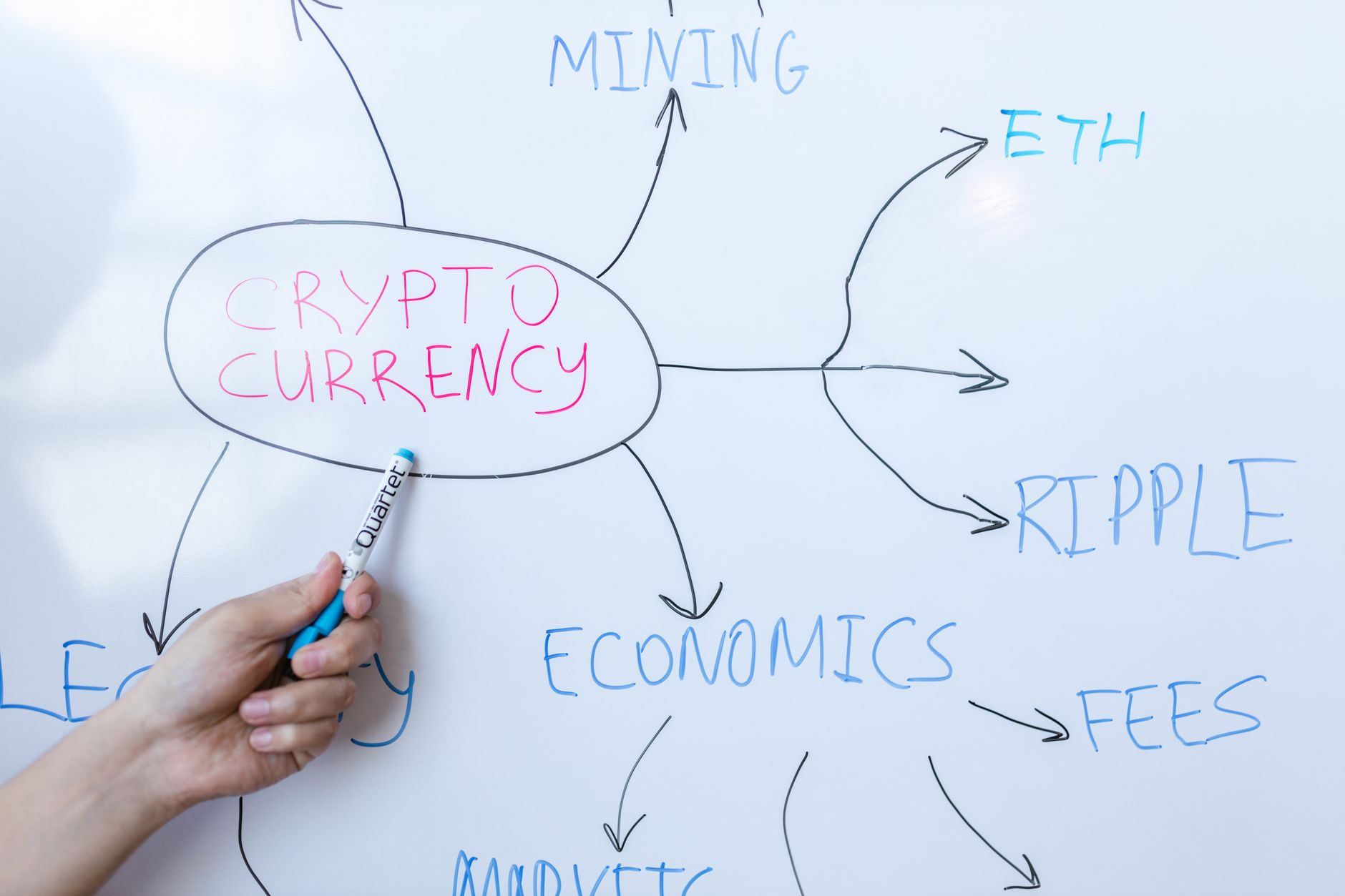
Most people arrive in crypto through an app, buy a fraction of a coin, and then try to learn the vocabulary backward. Charting tools show you what happened in the last four hours. They say nothing about why a network rejects a transaction, why a fork creates two assets, or why a hardware wallet asks you to write down twelve words. Books fill that gap. A good blockchain book costs less than a month of exchange fees and gives you a framework you keep for years. Start with our beginner’s guide to crypto trading if you need order types first, then come back to this reading list.
This comparison covers six books that still hold up in 2026, judged on four criteria: accuracy after publication, usefulness to someone who actually holds assets, readability, and cost. I checked current list prices in USD, converted to CAD at roughly 1.37, noted page counts, and flagged which titles are legally free online. Two of the six are available at no cost as full digital texts, which matters when a hardcover imports at $80 CAD after shipping. Prices move with editions and retailers, so treat every number here as approximate. The goal is not a trophy shelf. It is to answer one question: which of these will change how you read a block explorer, a fee schedule, or a central bank headline?
One warning before the list. Every book on this page was written before the most recent tax and reporting changes, and several predate rules that now apply to you. Canada’s Canada Revenue Agency treats a crypto disposal as a taxable event, and that includes swapping one coin for another, not just cashing out to dollars. US filers face a similar rule set, and the reporting forms have shifted more than once since 2018. A bookstore title cannot keep pace with that cycle. Use books for the concepts and primary sources for the compliance details.
Books also will not custody your coins, pick a venue, or calculate your cost basis. Those are operational decisions. If you cannot answer a simple question like what you paid for each lot, fix that with portfolio tracking and tax reporting before you add more reading. A chapter on monetary history will not tell you whether your platform charges 0.10% or 0.60% on a taker order, and it will not warn you that a withdrawal limit resets on a rolling 24-hour window. Separate the theory from the plumbing, and both get easier.
How Do the Top Options Compare?
| Book | Best For | Level | Print Length | Typical Price (USD) |
|---|---|---|---|---|
| Mastering Bitcoin (3rd ed.) | Protocol fundamentals | Intermediate to advanced | About 400 pages | $60 print, free on GitHub |
| The Bitcoin Standard | Monetary economics | Beginner friendly | About 300 pages | $25 print, about $15 audio |
| Mastering Ethereum | Smart contracts and the EVM | Advanced | About 424 pages | $60 print, free on GitHub |
| Bitcoin and Cryptocurrency Technologies | Academic study | Intermediate | About 336 pages | $45 hardcover, free draft PDF |
| The Blocksize War | Governance and market history | Intermediate | About 260 pages | $20 paperback, about $10 ebook |
| Broken Money | Modern money and payments | Beginner friendly | About 400 pages | $30 print, about $20 audio |
Prices are USD list prices checked in early 2026 and converted to CAD at roughly 1.37 CAD per USD. Retailers vary, and Canadian buyers may pay shipping, duty, or GST/HST on imported print copies. The free digital editions are distributed under the licences chosen by their authors and publishers, so check the terms before redistributing or republishing any text.
1. Mastering Bitcoin (3rd Edition) , Best for Protocol Fundamentals

Andreas M. Antonopoulos wrote the first edition in 2014 and has revised it twice since. The third edition arrived in December 2023 and runs roughly 400 pages in print. O’Reilly lists the paperback near $60 USD, which lands around $82 CAD before shipping, while the full text sits free on GitHub under a Creative Commons license. If you learn best from a screen, the digital version costs you nothing but time.
The content is pure protocol. Chapters walk through keys and addresses, wallet architecture, transaction scripts, the peer-to-peer network, mining, and consensus rules. There is no price chart anywhere in the book and no trading section. What you get instead is the mental model that explains why a seed phrase matters more than a password and why a native segwit transaction saves fees on the same block space.
Chapter 5 on wallets pairs well with our guide to cold storage and hardware wallets, because the book covers key derivation at a level that most exchange help pages skip entirely. Read it before you move serious size off a custodial account. The third edition also covers Taproot, which older editions miss.
Key strengths:
- ✅ Free digital edition on GitHub under a Creative Commons license, so cost is not a barrier.
- ✅ Third edition covers Taproot and current fee mechanics rather than the 2014 baseline.
- ✅ Explains keys, scripts, and consensus deeply enough to make exchange documentation readable.
- ✅ No hype and no price talk, which keeps the focus on how the network actually functions.
- ✅ Diagrams and examples suit readers who learn by building rather than by skimming.
- ❌ Dense for anyone who has never read a protocol specification or opened a terminal.
- ❌ Zero coverage of trading, portfolio construction, or tax treatment.
- ❌ Later chapters assume comfort with code and cryptographic notation.
Who it’s for: Choose this if you want to understand how Bitcoin works at the machine level and you are willing to read slowly.
2. The Bitcoin Standard , Best for Monetary Economics
Saifedean Ammous published this in 2018 and it has moved well over a million copies across print, ebook, and audio. The paperback runs about 300 pages and sits near $25 USD, roughly $34 CAD, with the audiobook closer to $15. Most readers finish it in a weekend, which is rare for a book with a monetary theory spine.
The first half is monetary history: stone money on the island of Yap, gold standards, central banking, and the argument that hard money shapes culture over decades. The second half applies that frame to Bitcoin. It is a book about money, not about blockchain engineering, and you will not find Solidity or gas fees anywhere inside it. Holding this book against Mastering Ethereum is the useful exercise, because they barely overlap.
Read it for the vocabulary. Terms like stock-to-flow, time preference, and sound money appear in almost every crypto debate, and this title is where much of that language entered circulation. Just do not treat it as a balanced survey. Ammous is openly hostile to altcoins and to central banks, and he argues the case hard. Pair it with something more skeptical so you hear both sides of the argument.
Key strengths:
- ✅ Reads in a weekend, which makes it the easiest entry point on this list.
- ✅ Explains monetary terms that dominate crypto discussion, including stock-to-flow and time preference.
- ✅ Cheap in every format, around $25 USD in print and roughly $15 for audio.
- ✅ Almost no jargon, so no technical or finance background is required.
- ❌ Openly one-sided, with no serious treatment of competing monetary views.
- ❌ Dismisses altcoins, DeFi, and stablecoins, which limits its usefulness beyond Bitcoin.
- ❌ Dated on exchange market structure, which changed substantially after 2020.
Who it’s for: Choose this if you want the intellectual case for Bitcoin as money and you accept that the author does not pretend to be neutral.
3. Mastering Ethereum , Best for Smart Contract Developers
Antonopoulos and Gavin Wood, a co-founder of Ethereum and the creator of the Solidity language, published this in 2019. The print edition runs about 424 pages and lists near $60 USD, roughly $82 CAD, with the text also free on GitHub. Wood’s involvement gives the book unusual authority on how the Ethereum Virtual Machine actually executes code.
It covers accounts, transactions, gas, the EVM, contract development, and security patterns. If you have ever wondered why a failed transaction still burns gas, the explanation is in here in plain language. Chapters on token standards and oracles remain useful reference material even now, because the interfaces described are still in use.
The obvious catch is age. The book predates the Merge, so every mining chapter describes a proof-of-work network that no longer exists. Gas mechanics also shifted with EIP-1559 in 2021, which introduced a base fee that gets burned. Treat the DeFi and application chapters as background, then check current practice in our DEX comparison guide before you interact with any pool.
Key strengths:
- ✅ Co-written by Gavin Wood, which lends authority to the EVM and gas explanations.
- ✅ Free full text on GitHub alongside the $60 print edition.
- ✅ Covers contract security patterns that still apply to audited code.
- ✅ Detailed chapters on wallets, transactions, and token interfaces.
- ❌ Predates the Merge, so all mining content describes a network that no longer exists.
- ❌ No coverage of rollups, restaking, or DeFi mechanics developed after 2020.
- ❌ Assumes some programming experience, especially from chapter 7 onward.
Who it’s for: Choose this if you write code and want to read contracts, gas, and the EVM from the inside out.
4. Bitcoin and Cryptocurrency Technologies , Best for Academic Study
Arvind Narayanan, Joseph Bonneau, Edward Felten, Andrew Miller, and Steven Goldfeder wrote this as a Princeton course text. It came out in 2016, runs about 336 pages, and sells for around $45 USD hardcover, near $60 CAD. The authors posted a draft PDF free online and the accompanying lecture series is still on YouTube, so the full course costs nothing if you skip the printed copy.
Where commercial crypto books chase trends, this one builds from first principles: cryptographic hashes, digital signatures, consensus in the presence of Byzantine faults, anonymity, and mining incentives. Problem sets close each chapter, which turns reading into practice. It is the closest thing to a university course in book form, and the tone stays neutral about which coin wins.
The trade-off is the year. There is nothing on DeFi, rollups, staking derivatives, or NFT markets, because none of that existed when the manuscript was finished. The core cryptography has aged well while the market commentary has not. The book also says nothing about reporting obligations, so pair the theory with the IRS virtual currency guidance when you need the rules rather than the math.
Key strengths:
- ✅ Free draft PDF and a full lecture series available online.
- ✅ Problem sets at the end of each chapter turn reading into practice.
- ✅ Builds cryptography and consensus from first principles instead of anecdotes.
- ✅ Neutral tone, with no promotion of any specific coin or project.
- ❌ Published in 2016, so every market and application chapter is stale.
- ❌ Academic pacing makes it slow going for casual readers.
- ❌ No practical guidance on custody, exchange selection, or taxes.
Who it’s for: Choose this if you want a structured, university-level grounding in the cryptography and consensus math.
5. The Blocksize War , Best for Governance and Market History
Jonathan Bier, an investment analyst at Bitwise, published this in 2021. It is short by crypto standards at roughly 260 pages, and cheap: about $20 USD for the paperback and around $10 for the ebook, so roughly $27 CAD in print. You can finish it across a few evenings.
The subject is the 2015 to 2017 fight over Bitcoin’s block size limit, the conflict that produced Bitcoin Cash and reshaped how the network governs itself. Bier writes as a participant and leans on mailing list posts, IRC logs, and conference transcripts, which gives the account a documentary feel rather than a memoir one.
It explains why protocol changes take years and why miners, node operators, developers, and exchanges each hold different leverage in a dispute. That context matters every time a scaling debate resurfaces, though the book says nothing about execution. For the practical side of acting on a market view, our day trading and swing trading guide covers order types and risk placement.
Key strengths:
- ✅ Primary-source history drawn from mailing lists, IRC logs, and conference transcripts.
- ✅ Cheap in both formats, about $20 USD in print and near $10 for the ebook.
- ✅ Explains why protocol changes take years and who actually holds leverage.
- ✅ Short enough to read twice, which helps with the dense chronology.
- ❌ Narrow topic that mainly appeals to readers following Bitcoin governance.
- ❌ Heavy chronological detail can feel repetitive if you did not follow the events live.
- ❌ No technical instruction and no trading content.
Who it’s for: Choose this if you want to understand how a decentralized network resolves conflict, told by someone who was in the room.
6. Broken Money , Best for Modern Money and Payments

Lyn Alden published Broken Money in 2023. It runs about 400 pages and sells near $30 USD, roughly $41 CAD, with the audiobook closer to $20. Alden is a macro analyst rather than a developer, and the writing reflects that background: clear, sourced, and focused on systems rather than code.
The book traces money from commodity coins through the Eurodollar system to stablecoins and Bitcoin, arguing that payment rails and monetary policy are two halves of one story. Chapters on correspondent banking and remittance corridors are unusually clear, especially for readers who have only seen crypto from inside an exchange app. It addresses the modern plumbing that older titles ignore.
It is the most current book on this list and the easiest to recommend if you only want one. What it will not do is teach you to file a return or size a position. Canadian readers should pair it with our CRA capital gains guide, and anyone tracking holdings can cross-check the market claims against live data from Messari.
Key strengths:
- ✅ The most recent title here, published in 2023, so it covers stablecoins and modern payment rails.
- ✅ Connects banking infrastructure to monetary policy in plain language.
- ✅ Roughly 400 pages of current macro context for about $30 USD.
- ✅ Accessible to readers with no finance background or technical training.
- ❌ Several macro positions are actively debated among economists, especially on inflation.
- ❌ Not a how-to guide for wallets, exchanges, or trading mechanics.
- ❌ Long enough that casual readers may stall halfway through.
Who it’s for: Choose this if you want one current, well-sourced book that connects crypto to the wider monetary system.
Frequently Asked Questions
What is the best blockchain book for a complete beginner?
The Bitcoin Standard or Broken Money. Both are written for readers with no technical background, and both stay under 400 pages. Bitcoin and Cryptocurrency Technologies is the stronger choice if you want an academic foundation instead of a narrative one.
Are any blockchain books free?
Yes. Mastering Bitcoin and Mastering Ethereum are free to read on GitHub under a Creative Commons license, and Princeton posted a free draft of Bitcoin and Cryptocurrency Technologies. The paid print editions contain the same core text.
Do I need coding skills to read Mastering Bitcoin?
Not for the first half. Chapters on keys, addresses, and wallets are readable without programming experience. Later chapters on scripts and the peer-to-peer network lean on code, so some readers skip them on a first pass.
Which blockchain book is best for investors rather than developers?
Broken Money for macro context, and Cryptoassets by Burniske and Tatar for valuation frameworks, though that title dates to 2017. Mastering Bitcoin and Mastering Ethereum are written for people building on or studying the protocol.
How current are these books on crypto tax rules?
Not current at all. Nothing on this list reflects the reporting requirements in place for 2026 filings. Check IRS virtual currency guidance for US rules and the Canada Revenue Agency for Canadian treatment, or work with a tax professional.
Can a book teach me to trade crypto?
No. Books explain networks, money, and incentives, but execution is a separate skill. Order types, position sizing, and stop placement come from practice and from sources that update as market structure changes.
Should I read The Bitcoin Standard if I hold altcoins?
It is still worth reading because the arguments inside shape how Bitcoin holders talk about every other asset. Just expect a hostile framing toward altcoins, and read a second source before forming a view.
What Should You Remember?
- Start with one book, not six. Reading Mastering Bitcoin before you understand what a private key does will burn a month of study.
- Free editions exist. Mastering Bitcoin and Mastering Ethereum are legally free to read on GitHub, which saves about $60 USD per title.
- Books go stale on compliance. No title on this list covers 2026 reporting rules, so verify tax treatment with the IRS or the CRA.
- Match the book to the goal. Protocol texts serve builders, monetary history serves context, governance history serves market structure.
- Prices stay modest. Every title here lists between $20 and $60 USD, so a full shelf costs less than a year of trading fees for many retail accounts.
- Reading is not custody. No book secures your coins, so handle wallet hygiene and exchange selection as separate decisions.
This content is for general information and education only, not financial, investment, or tax advice. Cryptocurrency is volatile and you can lose money. Always do your own research and consult a licensed financial or tax professional before making decisions. Nothing here is a recommendation to buy, sell, or hold any asset.