Distributed ledger technology is a database replicated across many computers. Each participant holds a copy. Changes require agreement through a consensus mechanism. That removes the single point of failure you get with a bank ledger or brokerage database. The Investopedia definition explains that DLT includes blockchain but also covers structures like directed acyclic graphs. For Canadian and US traders, DLT is the technical layer behind Bitcoin, Ethereum, Solana, and XRP Ledger. The trade-off is always the same. Decentralization, speed, and cost cannot all be maximized at once. Understanding that triangle matters more than memorizing ticker symbols.
We compared five major distributed ledgers that matter to crypto traders and investors in 2026. We looked at consensus design, typical transaction fees, settlement speed, native asset risk, and regulatory treatment in Canada and the United States. The Canada Revenue Agency taxes gains from DLT-based assets as capital gains or business income. The IRS applies similar rules to virtual currency. Fee data comes from live network activity and public market sources. We did not factor in short-term price predictions. No network here is a buy call. This is a structural comparison.
Why now? More retail money moved into crypto through 2024 and 2025. Regulators in Canada and the United States tightened rules around exchanges, custody, and reporting. DLT networks evolved too. Ethereum switched to proof of stake. Solana shipped validator upgrades to reduce outages. XRP Ledger gained partial legal clarity after the SEC case. Traders need to know what they actually own when they hold BTC, ETH, SOL, or XRP. That starts with the ledger underneath. Read our beginner’s guide to crypto trading before you pick an exchange or wallet.
The comparison below ranks nothing. Each network has a different job. Bitcoin maximizes censorship resistance. Ethereum optimizes for programmable contracts. Solana pushes high throughput at very low cost. XRP Ledger specializes in settlement. Hyperledger Fabric serves private enterprise needs. For funding and custody, compare exchange fees, deposit methods, and withdrawal limits before committing. Canadian traders should confirm FINTRAC registration and CAD funding options. American traders should check state licensing. A bad exchange choice can cost more than any network fee. We also note that public DLT assets are volatile. Position sizing matters more than network choice. Never risk more than you can afford to lose. Let’s examine each ledger in detail.
How Do the Top Options Compare?
| Network | Best For | Consensus | Typical Fee | Speed | Native Asset |
|---|---|---|---|---|---|
| Bitcoin (BTC) | Store of value, censorship resistance | Proof of Work | $2-$5 USD per transaction | ~10 min block time | BTC |
| Ethereum (ETH) | Smart contracts, DeFi | Proof of Stake | $1-$20 L1 gas | ~12 sec block time | ETH |
| Solana (SOL) | Low-cost high-throughput apps | Proof of History + Proof of Stake | ~$0.00025 per transaction | ~400ms block time | SOL |
| XRP Ledger (XRP) | Cross-border payments | XRP Ledger Consensus Protocol | ~0.00001 XRP | 3-5 seconds | XRP |
| Hyperledger Fabric | Private enterprise DLT | Pluggable consensus | No token fee; infrastructure cost | Configurable | None |
Fees and speeds are approximations as of early 2026. Public network fees rise sharply during congestion. Hyperledger Fabric is permissioned and requires private infrastructure. Always verify live data on a market source before executing trades.
1. Bitcoin (BTC) , Best for Censorship-Resistant Value Storage
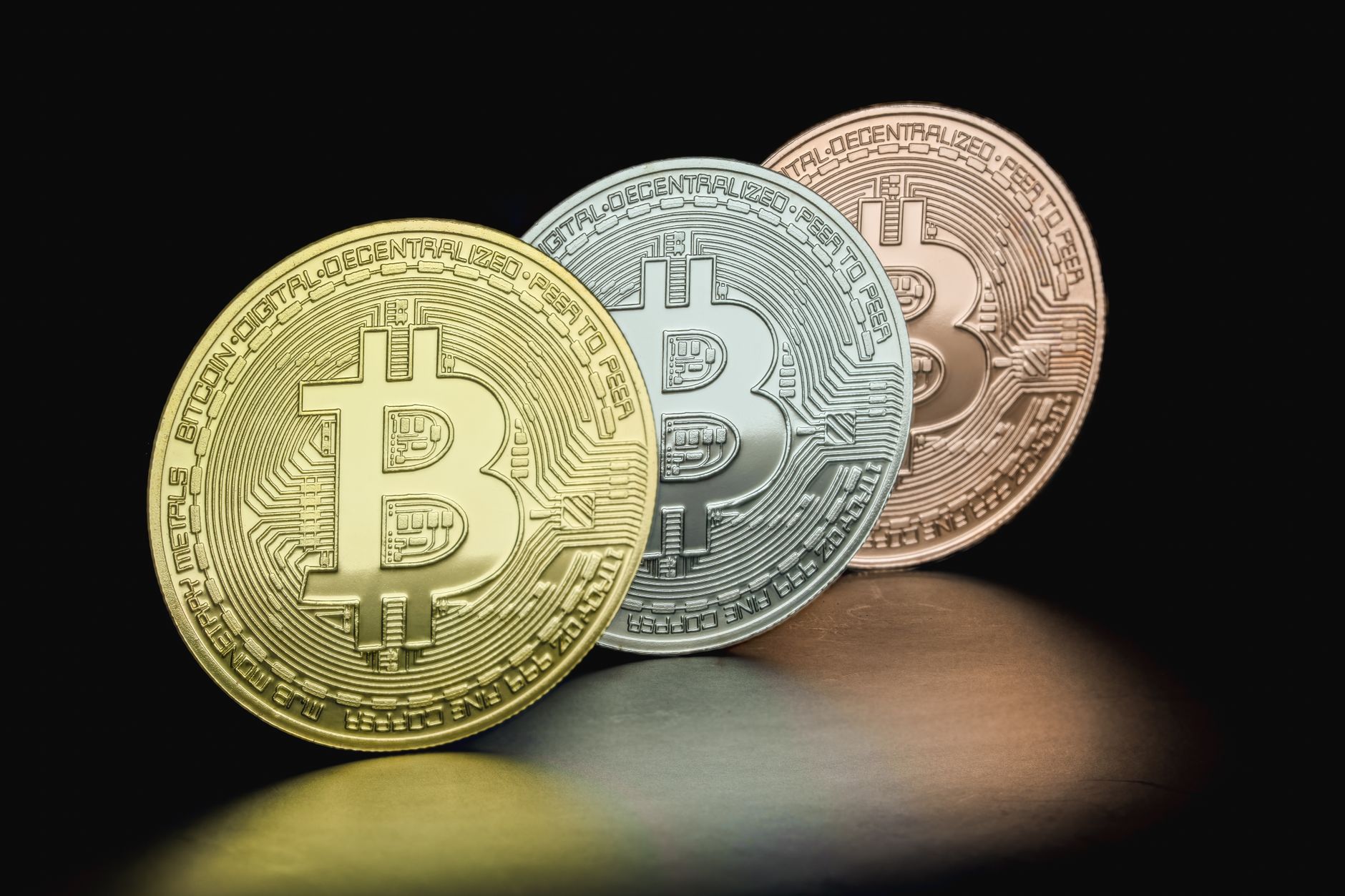
Launched in 2009, Bitcoin is the first public distributed ledger. It uses proof of work, so miners burn electricity to add blocks. The average block time sits near 10 minutes. A standard on-chain transfer costs $2 to $5 in normal conditions. The supply cap is 21 million BTC. That hard cap is why many investors treat Bitcoin as a long-term store of value. If you want exposure, read how to buy Bitcoin and compare order types before funding an exchange.
Security comes from massive hash power spread across independent miners. No single miner can quietly rewrite history. The cost of that security is slow settlement and high energy use. Exchanges often wait for multiple confirmations before crediting large deposits. That means you may wait 30 to 60 minutes for full finality. Traders should plan around those delays.
The main downside is speed. Bitcoin cannot compete with Solana or XRP Ledger for high-frequency transfers. Still, Bitcoin remains the most liquid and widely accepted DLT asset in North America. Its market depth makes it the benchmark for the entire crypto market.
Key strengths:
- ✅ Strongest decentralization and censorship resistance among public ledgers
- ✅ Fixed supply of 21 million BTC creates predictable scarcity
- ✅ Deep liquidity across Canadian and US regulated exchanges
- ✅ Longest track record with high network uptime since 2009
- ✅ Widely accepted as collateral by many lending and staking platforms
- ❌ 10-minute block time makes fast settlement impractical
- ❌ On-chain fees climb sharply during congestion
- ❌ Proof of work uses significant electricity
Who it’s for: Long-term investors who want the most battle-tested, censorship-resistant DLT asset.
2. Ethereum (ETH) , Best for Smart Contracts and DeFi
Ethereum is the leading smart contract DLT. It switched to proof of stake in 2022. The average block time is about 12 seconds. L1 gas fees vary a lot. A simple ETH transfer often costs $1 to $5. A complex DeFi swap can cost $20 or more during congestion. That fee pressure pushed many users to Layer 2 networks. Read how to buy Ethereum before choosing a funding method.
Ethereum hosts most DeFi activity, stablecoins, and NFT projects. Staking ETH on the base network can earn around 3% to 5% APY. That yield comes with lockup and slashing risks. The network’s modular upgrades should lower costs over time, but L1 fees remain unpredictable. Developers still prefer Ethereum’s smart contract standard.
The main downside is fragmentation. Layer 2 solutions reduce fees but add bridge risk. Liquidity splits across many chains. For long-term investors, Ethereum is the second-largest DLT asset. For active traders, gas fees can eat into small positions. Size your trades accordingly.
Key strengths:
- ✅ Largest developer base for smart contracts and DeFi
- ✅ Proof of stake cuts energy use versus proof of work
- ✅ 12-second block time settles faster than Bitcoin
- ✅ Broad support across Canadian and US exchanges
- ✅ Strong staking and lending markets
- ❌ L1 gas fees unpredictable and sometimes over $20
- ❌ Multiple Layer 2 networks create bridge and liquidity fragmentation
- ❌ Staking has lockup and slashing risk
Who it’s for: DeFi users, NFT traders, and long-term investors wanting smart contract exposure.
3. Solana (SOL) , Best for Low-Cost High-Speed Transactions

Solana uses proof of history plus proof of stake. That design allows sub-second block times around 400 milliseconds. Transaction fees are extremely low. A typical transfer costs about $0.00025. That speed and cost opened the door to memecoin trading and high-frequency arbitrage. Our guide to how to buy Solana covers regulated on-ramps.
Solana has had high-profile outages. Early versions stopped producing blocks under extreme load. The validator set has improved, and the Firedancer client aims to add capacity. Automated traders should monitor uptime before running strategies. The low fees make short-interval trading practical.
For many retail traders, Solana is the best balance of cost and speed. It lacks Bitcoin’s decade-long history and Ethereum’s developer depth. Still, daily active addresses and DeFi activity have grown sharply. The main risk is centralization. A smaller validator set can coordinate upgrades more easily than Ethereum or Bitcoin.
Key strengths:
- ✅ Sub-second block times around 400ms
- ✅ Transaction fees near $0.00025, far below Ethereum and Bitcoin
- ✅ Supports high-frequency and arbitrage trading
- ✅ Native staking available on many exchanges
- ✅ Large retail trading volume
- ❌ History of network outages under extreme load
- ❌ Smaller validator set raises centralization concerns
- ❌ Less battle-tested than Bitcoin and Ethereum
Who it’s for: Active traders and developers who need cheap, fast transactions on a public ledger.
4. XRP Ledger (XRP) , Best for Cross-Border Payment Settlement
XRP Ledger is a payment-focused DLT. It does not use proof of work or proof of stake. Instead, it runs the XRP Ledger Consensus Protocol. Settlement takes about 3 to 5 seconds. A standard transaction costs around 0.00001 XRP, often under $0.0001. That makes XRP one of the cheapest major assets to move. For exchange options, read our guide to the best crypto exchanges for altcoins.
Ripple sells payment software that can use XRP as a bridge currency. Banks and payment providers in several countries have tested it. The SEC case against Ripple Labs created years of uncertainty. A 2023 ruling said programmatic sales on exchanges were not securities transactions in that context. Regulatory risk still exists. Always check current guidance before trading.
XRP Ledger lacks the smart contract flexibility of Ethereum or Solana. It has some token issuance and NFT support, but DeFi activity is smaller. Investors should separate the company Ripple from the independent XRP Ledger. Live market data is available on CoinGecko.
Key strengths:
- ✅ 3 to 5 second settlement for payment style transfers
- ✅ Fees under $0.0001, among the lowest of major DLTs
- ✅ Long track record in payment settlement and bank pilot programs
- ✅ Partial legal clarity following the SEC summary judgment
- ✅ No mining energy consumption
- ❌ Limited smart contract and DeFi activity compared with Ethereum
- ❌ Ongoing regulatory uncertainty in some jurisdictions
- ❌ Validator set uses a trusted Unique Node List, raising centralization questions
Who it’s for: Payment-focused investors and traders who want fast, very low-cost transfers.
5. Hyperledger Fabric , Best for Private Enterprise DLT
Hyperledger Fabric is a permissioned DLT for enterprises. It has no native token. A company or consortium controls who can join. Consensus is pluggable, with options such as Raft or PBFT. Transaction speed and finality are configurable, often sub-second in controlled settings. That makes it useless for retail crypto trading. It is built for supply chains, trade finance, and central bank pilots.
Because there is no token, there is no spot market, no staking yield, and no CRA or IRS capital gain on a network token. The cost is infrastructure and licensing. Hyperledger Fabric deployments require IT staff, hardware, and ongoing maintenance. This is not a buy-and-hold asset.
The advantage is privacy and control. A bank can run a ledger without exposing customer data to the public. The trade-off is trust. You trust the consortium and its operators. Public ledgers rely on code and economic incentives. For individual investors, Hyperledger Fabric is a concept to understand, not a place to deploy capital.
Key strengths:
- ✅ Private permissioned access controls sensitive business data
- ✅ Pluggable consensus allows customizable speed and finality
- ✅ No native token means no volatile speculative fees
- ✅ Used by enterprise consortia and central bank pilots
- ✅ Flexible channel architecture for confidential transactions
- ❌ No retail token or secondary market exposure
- ❌ Requires significant enterprise infrastructure and IT cost
- ❌ Not censorship resistant; a consortium can change rules
Who it’s for: Enterprise developers and institutional architects building private DLT systems, not retail traders.
Frequently Asked Questions
What is distributed ledger technology?
Distributed ledger technology is a database shared across multiple computers. Each participant holds a synchronized copy. Transactions require consensus before they are recorded. It removes the single point of failure found in a central database.
Is every blockchain a distributed ledger?
Yes. Every blockchain is a type of distributed ledger. Not every distributed ledger uses blocks. Some use directed acyclic graphs or other structures. The common feature is data replicated across many nodes.
Which distributed ledger is best for crypto traders?
It depends on the strategy. Bitcoin suits longer-term benchmark exposure. Ethereum suits DeFi and smart contracts. Solana suits low-cost high-frequency trading. XRP Ledger suits payment style transfers. Traders should match the network to the task.
Are transactions on distributed ledgers taxable in Canada and the USA?
Yes. The Canada Revenue Agency and the IRS treat gains from DLT assets as taxable. They may be capital gains or business income depending on how you trade. Keep records of every trade for cost basis reporting.
What is the difference between permissioned and permissionless DLT?
A permissionless DLT lets anyone join and validate transactions. Bitcoin, Ethereum, and Solana are permissionless. A permissioned DLT restricts access to approved parties. Hyperledger Fabric is a common permissioned example used by enterprises.
Can I invest directly in Hyperledger Fabric?
No. Hyperledger Fabric has no native token or secondary market. It is private infrastructure. Investors looking for DLT exposure should use public networks with tradable assets like BTC, ETH, or SOL.
What Should You Remember?
- Distributed ledger technology is a shared database across independent computers, not one company’s server.
- Bitcoin offers the strongest decentralization but costs $2 to $5 per transfer and settles in 10-minute blocks.
- Ethereum hosts most DeFi and smart contracts, with L1 gas fees of $1 to $20 and 12-second blocks.
- Solana delivers near-instant finality around 400ms and transaction fees near $0.00025, but it has outage history.
- XRP Ledger focuses on bank-grade payments with fees under $0.0001 and 3 to 5 second settlement.
- Hyperledger Fabric is permissioned enterprise DLT with no retail token or speculative market.
- Tax treatment depends on use: the CRA and IRS tax DLT asset gains as capital gains or business income.
This content is for general information and education only, not financial, investment, or tax advice. Cryptocurrency is volatile and you can lose money. Always do your own research and consult a licensed financial or tax professional before making decisions. Nothing here is a recommendation to buy, sell, or hold any asset.